Showing posts with label design. Show all posts

Tuesday, May 12, 2026

Agentic AI 2.0 Design Safety Principles

As we graduate from the Agentic AI 1.0 era, we probably should have learned some lessons:

I think you can see where we are going with this. Agentic AI where users have to approve everything is not usable, but Agentic AI where users approve nothing is dangerous and irresponsible. As a middle ground, Agentic AI 2.0 should be designed with the following principles:

  • Well-defined authentication scope that limits an AI agent access to only what is needed to accomplish a task. Each task must be isolated to its own AI agent identity.
  • The authentication scope is a subset of what the human operator has permission to grant.
  • The authentication scope is short-lived (e.g. 1-20 hours) and has a revocation mechanism.
  • Writes and deletes are separate permissions from read, and these operations must be revertible.

In short, the authentication scope should be limited to the task, short lived, and revocable. Use data snapshotting to allow the task to be reverted if anything goes wrong.

Without data snapshotting, the write operation might instead log the before and after diff, and the delete operation might also only mark a resource for soft removal (30 days grace period). Only a human operator is allowed to expunge the data immediately. If this is a database row, instead of deleting a row, the table should probably just have a new "deleted_time" nullable column storing if and when the deletion occurs. The database then periodically vacuums the rows where deleted_time is older than a specific duration set by administrative policy.

At the beginning of a task, the AI agent will propose all the permissions it needs, to be approved by the human operator once until the completion of the task. If the MCP server provides methods to change the world, the MCP is responsible for enforcing the authentication scope and for data snapshotting.

Although the LLM itself without agentic ability is not able to change the world, it is still recommended to run the LLM as its own user or container, as the various PyPI packages needed to run the LLM might be subject to supply chain attack that can lead to local privilege escalation (e.g. through disk cache poisoning).

Friday, December 12, 2025

Secretive Key Attestation Possible?

On an old MacBook Pro 2019, I've been trying out Secretive (secretive.dev) to let me use the Touch ID (aka SecureEnclave) as a hardware SSH key, like how I would use Yubikey on other computers.

One of the things I would like to do is to create a certificate authority for key signing, to avoid having to manually add new keys to each host I have to SSH into. The certificate authority needs to tell that the hardware key is indeed generated by some qualified hardware, so the private key cannot be easily exfiltrated. Also, I should not be able to cheat by generating a key pair on a computer, making a copy somewhere, then load the private key onto the hardware token and pretend it was generated there.

Normally, using U2F with SSH gives me the option to generate a key attestation that can then be verified by the CA before signing the public key certificate. Essentially, I tell ssh-keygen to write the attestation to another file as the new key is generated, and the attestation will have to be parsed using a custom script in order to check against the vendor certificates published by FIDO2 Alliance.

There are several ways to generate key from the Secure Enclave:

Note that the Secretive 3.0.4 release notes mentions "GitHub attestation" but that is entirely different. It just says the binary built by GitHub actions will now have provenance.

Even though DeviceCheck.DCAppAttestService seems like a likely candidate to generate attested keys, the fact it requires a validation roundtrip to Apple's server can be problematic. It likely only works for apps uploaded to the App Store (which Secretive is not), and people will not be able to compile their own binaries and expect it to work. I'm also not sure how people may feel that Apple can now keep a record of all their SSH keys.

Probably, it's easier to just buy another Yubikey.

Thursday, December 11, 2025

Certificate Signing Request with Authentication Credentials

PKCS #10 (RFC 2986) certificate signing request (X509_REQ) typically contains at minimum the subject and the public key to be signed into a X.509 certificate issued by a certificate authority (CA). Here is an example of what I send to Let's Encrypt:

$ openssl asn1parse -item X509_REQ -in worship.likai.org.csr 
X509_REQ: 
  req_info: 
    version: 0
    subject: CN=worship.likai.org
    pubkey:     X509_PUBKEY: 
      algor: 
        algorithm: id-ecPublicKey (1.2.840.10045.2.1)
        parameter: OBJECT:secp384r1 (1.3.132.0.34)
      public_key:  (0 unused bits)
        0000 - 04 e4 5c 30 85 6f b5 37-35 f4 e9 21 3b 2c 74   ..\0.o.75..!;,t
        ... omitted for brevity ...
        005a - 33 2f c8 fb c1 21 86                           3/...!.
    attributes:
      <EMPTY>
  sig_alg: 
    algorithm: ecdsa-with-SHA256 (1.2.840.10045.4.3.2)
    parameter: <ABSENT>
  signature:  (0 unused bits)
    0000 - 30 66 02 31 00 ce 23 b9-c3 b0 53 24 2f d3 8c b0   0f.1..#...S$/...
    ... omitted for brevity ...
    0060 - cc fe a2 64 fa f2 7a e6-                          ...d..z.

X509_REQ can also contain extensions, most notably subjectAltName. Some of the extensions are documented in x509v3_config, which includes the ability to send arbitrary extensions. PKCS #9 (RFC 2985) defines the attributes that can be used in a PKCS #10 CSR. Arbitrary extensions are defined by an object identifier (OID) key and some ASN.1 value. We can lookup the OID assignments.

As currently defined, X509_REQ does not have the ability to include authentication credentials, i.e. the CA only knows the subject and its public key, and the X509_REQ itself is signed by the same subject's public key for integrity, but the CA does not know whether the subject is whom they claim to be.

That kind of trust has to be verified out of band. In the case of Let's Encrypt (how it works), the ACME protocol performs domain validation by fetching the result of a challenge response over plaintext HTTP at the domain name matching the CN subject in the CSR. This requires the host to be reachable from the public Internet, which is not feasible for internal servers. There are other challenge types: TLS-ALPN-01 also requires the host to be reachable from the public Internet; DNS-01 does not require the host to be reachable, but the requestor must be able to modify the DNS record, which can present other difficulties.

Enrollment over Secure Transport (EST) is another protocol to automate certificate signing (like ACME). It authenticates the CSR at the API layer but not as part of the CSR. However, binding the API authentication to the CSR remains a challenge.

There are a few potential OIDs we can investigate for their suitability to include authentication credential as part of the CSR:

  • PKCS #9 defines a challengePassword OID 1.2.840.113549.1.9.7, but it is supposedly used to request certificate revocation. It seems to be unimplemented. Also, it is generally a bad idea to repurpose a field for a different purpose than originally intended.
    • The content of challengePassword is plaintext equivalent, which means the CSR should be protected by other means so it is not public accessible.
  • RFC 7894 proposes additional fields to disambiguate the PKCS #9 challengePassword, notably: otpChallenge, revocationChallenge, estIdentityLinking.
    • It assumes that the primary authentication is done by the underlying transport such as EST. The additional fields can provide a second-factor authentication.
  • The SMI mechanism OID 1.3.6.1.5.5 references additional mechanisms tracked by IANA. In particular:
    • The aforementioned RFC 7894.
    • There is a working draft draft-ietf-lamps-csr-attestation-08 to attest the CSR with evidence, which is intended to come from a hardware TPM or PSA. Presumably, the evidence can be further extended to cover FIDO U2F or Passkeys. These evidences must not contain plaintext equivalent secrets.
  • Kerberos OID 1.2.840.113554.1.2.2 (RFC 1964) does not have an OID for the challenge response, as far as I can tell.

These proposals tend to avoid putting plaintext secrets into CSR, but the ability to secure secret credentials in a CSR remains elusive.

Envelope Proposal

To be able to include secrets in CSR, we can use the CA's public key to encrypt the plaintext, and we store the ciphertext in an envelopedData. There are three potential OIDs defining envelopedData:

The envelopedData defined by PKCS #7 (RFC 2315) is obsolete by the latest version RFC 5652, which seems to be the correct candidate to store encrypted secrets destined for the CA. If the CA has multiple certificates, they can all be included as a recipientInfo.

Inside the envelopedData should be a SEQUENCE that contains at least the SET OF Attribute{{ IOSet }} as defined in PKCS #10 (RFC 2986). This also opens up the possibility to include anything from an LDAP directory OID 2.5.4 (RFC 4519 or ISO/IEC 9594-6:2020 or X.520) that might need to be protected from public access, such as userPassword 2.5.4.35 or maybe encryptedUserPassword 2.5.4.35.2.

Afterthoughts

On one hand, having a global OID means applications and protocols can share relevant definitions when appropriate, but navigating the maze of existing OID assignments can be an exercise in frustration. It is similar to code reuse: sometimes the code you borrow from almost does what you need except for some corner cases, but you cannot change the corner case behavior because it may break existing users relying specifically on the corner case. So you have to choose the OID carefully based on how you expect the OID to evolve in the future, and try to find an OID that best aligns with the use case.

It is tempting to start from scratch and define exactly what an application needs in an application-specific way without any historical baggage, like JOSE (JWS/JWT). Their RFCs are still long, but still shorter than the maze of OIDs, RFCs, and ITU/ISO standards. It would be nearly trivial to abbreviate the CSR to another JSON object.

It is also interesting how OID leaves the breadcrumbs showing how the Internet standards evolved. At first, RSA developed the PKCS under its OID 1.2.840.113549 {iso(1) member-body(2) us(840) rsadsi(113549)}, then this namespace is donated to IANA. Similarly, the OID 1.3.6.1 {iso(1) identified-organization(3) dod(6) internet(1)} used to be owned by DoD (Department of Defense), now hijacked by IANA as well.

Tuesday, December 9, 2025

Runtime TLS Certificate Hot-Reload with OpenSSL

For long-running microservices that can act as both client and server, it is possible the lifetime of the microservice might outlive its TLS certificate validity, especially if an organization opts for a security policy to rotate TLS certificates quickly (e.g. every day). We need to be able to reload both the client and server certificates without exiting the service.

OpenSSL provides the functionality as follows:

  • For a client, the caller should use SSL_CTX_set_client_cert_cb() to provide a callback which is "called when a client certificate is requested by a server and no certificate was yet set for the SSL object." The caller provides a client_cert_cb() function that modifies the X509 ** and EVP_PKEY ** (pointer to a pointer), which OpenSSL will use to call SSL_use_certificate() and SSL_use_private_key() internally.
  • For a server, the caller should use SSL_CTX_set_tlsext_servername_callback() to provide a callback which is called during SNI. The caller provides a cb() function that modifies the SSL * object directly to override the SSL_CTX using SSL_set_SSL_CTX().

The callback can use an out-of-band method to reload the private key and certificate as needed. Once a connection has been authenticated during handshake, it will probably remain active even after the certificate expires, so the callbacks only apply to new connections.

To actively disconnect TLS transport with an expired certificate, some kind of connection pool management will be needed to wrap OpenSSL. This connection pool can also handle load balancing.

It is generally a good idea to allow certificate rotation to have some validity overlap so connections can be "upgraded" to the new certificates gradually. It avoids the problem where all connections die and have to be reconnected all at once, which can have undesirable latency impact.

Saturday, March 16, 2024

Carrot and Stick Security Design

Carrot and stick security design is the idea to have frontend and backend work together to enforce security policies in software. The frontend interacts with the user and steers them towards compliance, while the backend enforces the security rules. Although we don’t necessarily use carrot and stick to mean reward and punishment, the carrot is a “soft nudge” and the stick is a “hard boundary.” If the user bypasses the frontend and tries to interact with the backend directly, they will be met with a hard error message.


Image credit: Wikimedia Commons

(“Good cop, bad cop” is a similar strategy, although the cop analogy may be controversial.)

An example is a photo gallery that allows visitors to browse but only signed-in users to download images. The frontend may present a “download” button but will ask the user to either login or create an account. The backend checks that the login credentials are present before allowing the image to be downloaded.

If the security check is only done in the frontend, then the user could simply bypass login by forging a URL request directly to download the images. If the security check is only done in the backend, then an innocent user that did not know they need to signup or login first may be confronted with an unfriendly error message.

I’m intentionally using the terms “frontend” and “backend” loosely. In practice, the designations may differ depending on the application:

  • For a user-facing website, frontend is the client side Javascript, and backend is the HTTP server.
  • For a mobile app, frontend is the app, and backend is some API used by the app.
  • For an API, frontend is the HTTP server middleware, and backend is the internal data storage.

Even at the API level, the API design should try to encourage well-defined use cases (the carrot), and let the protocol layer check for malformed requests (the stick).

What this means is that a complete software stack that spans the gamut of client side Javascript or app, an API middleware, and backend storage should implement security enforcement at all layers.

Sunday, June 12, 2022

Designing a Data Breach Resilient Database

Rainbow crepe cake, by The Cooking of Joy.

With several high profile data breach settlements—such as Equifax and Morgan Stanley—coming to a conclusion, it begs the question: how do we prevent these data breaches from happening in the first place?

In the case of Equifax, attackers gained unauthorized access via their dispute portal website which allowed them to discover credential to the central database keeping the customer data, and they slowly exfiltrated that data over 76 days to avoid detection.

In the case of Morgan Stanley, the data breach was caused by improper disposal of used hard drives containing customer data.

Security is always as strong as the weakest link, so if we want to prevent future data breach, we have to understand how the storage stack works. It's helpful to think of storage as a layered model like how the OSI model (Open Systems Interconnection) helps us understand networking. We can tentatively call this the DSI model (Data Storage Interconnection). There is a straightforward analogy of the layers between these two models.

To recap, here are the OSI layers.


OSI model

OSIDescription
7*Application LayerA website or app that the user interacts with.
6*Presentation LayerInterpretation of the data, e.g. HTML, JSON, UTF-8.
5*Session LayerDefinition of request and response semantics, e.g. HTTP, gRPC.
4Transport LayerData transmission and flow control, e.g. TCP, UDP.
3Network LayerRouting of data between networks, e.g. IPv4, IPv6.
2Datalink LayerNode identification on a local network, e.g. Ethernet MAC.
1Physical LayerModulation of bits on a physical medium, e.g. 10GBASE-T.

* Note: The original OSI model specification only specified the purpose of each layer but not concrete examples of standards. Traditionally, HTTP is considered an "application" known as the web browser, but these days HTTP is also used for a transport like gRPC, which pushes it down to a lower layer. My definition here reflects the modern web2 or web3 stacking.


DSI model
DSIDescription
7Application LayerA website or app that the user interacts with.
6Presentation LayerInterpretation of the data, e.g. HTML, JSON, UTF-8.
5Schema LayerModeling of data, e.g. table definitions.
4Database LayerTransaction and indexing, e.g. SQL.
3Filesystem LayerAbstraction for files and directories, e.g. ZFS, NTFS, AWS S3.
2Block LayerBlock devices, e.g. SCSI, SATA.
1Physical LayerModulation of bits on a physical medium, e.g. SMR.

In a similar fashion, we can define data storage layers that are roughly analogous to the OSI layers. Application Layer and Presentation Layer are the same, but layers 5 and below are redefined for data storage purposes. Physical Layer has the same purpose again.

(As a side note, the Presentation Layer and Schema/Session Layer are typically where difficulties may arise when sharing data between different companies, for example to provide universal access to health records, and this is true both in the networking and data storage sense. But that's a topic for another day.)

As we can see, the Morgan Stanley data breach happened at the Physical Layer. The Equifax breach started at the Application Layer, but the data is exfiltrated at the Database Layer. However, data breach can happen at other layers too. Here is a summary of risk factors at each layer.


DSI attack vectors
DSIDescription
7Application LayerA vulnerable website allowing access to lower layer credentials, e.g. Equifax.
6Presentation LayerCross-site scripting, where malicious code is injected through data.
5Schema LayerEnumeration attack due to poorly designed data access policies.
4Database LayerExfiltration of data (e.g. Equifax), SQL injection attack.
3Filesystem LayerLocal privilege escalation.
2Block LayerNetwork attached storage in an unsecured network or using an insecure protocol.
1Physical LayerTheft or improper disposal of physical medium, e.g. Morgan Stanley.

* Note: as new attack techniques become known, I'll add them to the correct layer here.


It is tempting to try to put all security burden on the Application Layer, but it is unrealistic to expect that a single layer can handle all the attacks thrown at it. Again, since security is only as strong as the weakest link, we have to fortify each layer.

Application Layer should impose a strict separation of code and data. When possible, the application should be implemented using a compiled language with code placed in a read-only filesystem (see Revival of Harvard Architecture). The application should be shielded behind a monitoring system for detecting unusual access patterns, but reconnaissance alone is not enough. It is often already too late when the exploit is detected, but we still want to have real-time signal for exploit attempts.

Presentation Layer should escape data consistently when inserting one piece of data into another. User-supplied HTML should be parsed and scrubbed to keep only allowlisted elements. A proper templating library should be able to handle that. Don't use string concatenation for structural data.

Schema Layer should use itemized encryption as a means to control the sharing of data. Data is considered shared with someone if they have access to the session key for that data. One way to do this is to encrypt the item key for anyone that should have read access to the item. The user has an encrypted item key that can be decrypted by a credential of their choice. If the backend system requires access to the item, the item key will additionally be encrypted for the backend's role account credential.

Since anyone who has access to the item key will have access to all data encrypted by that item key, data should be scoped for the reader. Data for a different set of readers should be encrypted by its own item key. Nevertheless, access to the item's cipher-text should still be subject under an access-control list. Even though itemized encryption alone should prevent the enumeration attack, the additional access-control list guards against improperly designed itemized encryption key schedule or derivation.

Database Layer should apply a page-level encryption (such as SQLite Encryption Extension) even though user data is already encrypted by the Schema Layer. This allows Filesystem Layer to replicate or backup the database without worrying that some tables or indices may still contain unencrypted sensitive data.

We do not presently require the Filesystem Layer to implement any mitigation. This allows industry-standard data availability and redundancy practices to continue to be deployed. Vulnerability at this layer comes from the OS vendor and is typically outside of our control, so we mitigate this by having encryption at the Database Layer and the Block Layer.

Block Layer or Bit Layer should apply full-disk encryption so that it is impossible to recover data without the volume encryption key if the storage medium is improperly disposed. Encryption at this level alone is not enough because in case of a stolen laptop, a copy of the decryption key would still be found in system memory somewhere. And there is a good chance that the residual key can still be recovered after the laptop is powered off, e.g. by cryogenically freezing the RAM.

In summary, mitigation strategies tailored for each data storage layer together provide a defense in depth. Reasoning using the DSI model allows us to clearly see how the separation of concerns at each layer contribute to the overall mitigation strategy. And this is how to design a data-breach resilient database.


Monday, March 28, 2022

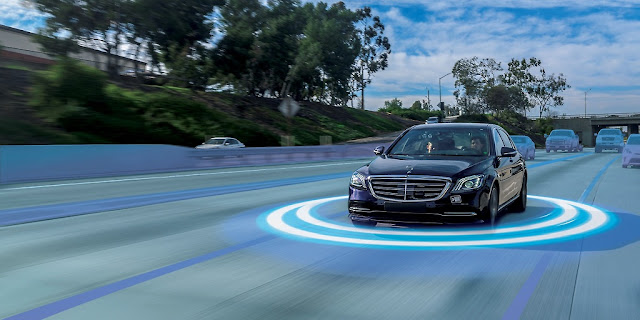
Self-Driving Car Challenges

Mercedes recently announced level 3 self-driving that takes legal liability. Typically, the levels of autonomy are defined by situations where the car is able to operate without human intervention, but being able to assume legal liability is a huge step forward. Levels of autonomy would only remain a marketing slogan unless it can be tested in court. The cost of liability will be factored into the insurance premium, so self-driving only becomes economically viable if the insurance premium can be lower than that of a human driver.

However, Mercedes' legal responsibility comes with limits: on certain (already-mapped) highways, below 40 mph, during daytime, in reasonably clear weather, without overhead obstructions.

The first challenge that any camera based system must overcome is the stability of the footage. You can see from this test that a car mounted camera with improper image stabilization (circa 2016) would produce a wobbly and shaky image. The wobble can be counteracted by shortening exposure time (high camera shutter speed) but this requires good lighting condition, hence the reasonably clear weather requirement. Furthermore, when the car is traveling fast, you need a telephoto lens to look further ahead for hazardous conditions, but longer telephoto also exacerbates the wobble, hence the operating speed limit of the self-driving. If the video footage is bad, it won't help much if you feed this into machine learning because "garbage in, garbage out." More recent cameras such as a GoPro has improved image stabilization (circa 2021) that also works on a toy car (circa 2020) which is more challenging to stabilize. These cameras can produce clean image under more forgiving lighting conditions.

Car manufacturers who are serious about their self-driving should be licensing camera stabilization technology from the likes of GoPro.

Self-driving cars using LIDAR face a different challenge. LIDAR works by sending a short pulse of light and observe reflections, so it is not dependent on external lighting conditions. But when there are multiple LIDAR equipped cars on the road, they could be picking up each other's signals which might seem like noises. As such, a LIDAR has to encode its own unique ID into the light pulse and filter out any pulse not coming from itself.

A third challenge is about how to legally dispute a claim in court. A self-driving system must be able to produce a rationale why it made any given decision, and the decision has to be legally justifiable. Previously, machine learning is a black box that could produce surprising results (it recognized a dumbbell only because it has an arm attached to it), but explainable AI is making some progress. Similarly, self-driving technology must be explainable.

Explainable self-driving technology can be thought of as a driving instructor that happens to be a computer. The driving instructor not only has to make the right decision on the road, but it also has to explain to a student why it is the right decision given the circumstance.

Car manufacturers that want to assume legal responsibility should aim for a computerized driving instructor instead.

A musician would understand that in order to perform at 100%, they must practice up to 120%. This mindset applies to a lot of engineering problems where safety is at stake. Building structures such as elevators are often designed with load considerations at ~200% rated capacity or more (ASCE/SEI 7-10 1.4.1.1 (b)). When it comes to self-driving, the specs are less quantifiable, but the design qualifications must similarly exceed expectation in order for the technology to be viable.

Thursday, November 5, 2020

Electronic Voting

As Americans patiently wait for the result of the 2020 POTUS election, I decided to take a crack at solving the electronic voting problem, with a timing that is perhaps a bit irrelevant now but may be useful again in 4 years. Now, this is by no means a survey of the state of the art on electronic voting, since the research has been done in so many years by so many people. This exercise is just for me to kill time.

A naive electronic voting may have accountability issues, namely we don't know if a vote is legitimate, or that all votes have been counted correctly. In order to know if a vote is counted, we need to know how everyone voted, which seems to sacrifice anonymity, unless we come up with an electronic analogy of a paper ballot. Traditionally, a ballot is issued in person at the voting station, or mailed to the voter in advance for mail-in ballots. There is little protection against ballot forgery, but it would be difficult to forge ballots physically at a large scale.

For electronic voting, a ballot certificate would be issued by the county government to the voter upon voter registration. The issuer is responsible for checking voter identification before issuance. This ballot certificate gives the voter the right to vote, and should be kept secret before a vote is cast (anyone in possession of a ballot certificate could vote with it). The certificate has a unique serial number and a cryptographic signature signed by the issuer. The serial number ensures that the ballot could only be used to cast at most one vote, and the signature verifies that the ballot is issued legally by the county. Otherwise the ballot is not tied to the voter identity. The county should maintain a separate list of voters who already registered, so a voter could only ever receive one ballot certificate. Large scale fraud can be detected if a county somehow issued more ballot certificates than its voting population.

Votes are entered into the voting databases along with the ballot certificate. Since the voting database contains no personal identifiable information, its entirety can be downloaded by the public when the election is concluded, and anyone could verify the presence of their vote in the database as well as independently count all of the votes. US population is only ~328 million, so the database is probably ever going to be only a few gigabytes which can comfortably fit onto a smart phone. Ballot verification could still take an hour or two (e.g. ed25519 signature verification rate is 71K/s), but counting should take only a few minutes if not seconds.

The challenge is distributing the database while ensuring integrity, since anyone receiving a copy with parts of the database missing or tempered with would not know it, and would arrive at a different count.

To ensure that all the votes are recorded without being tempered, they need to appear as part of a Merkle Tree (like how git works). Each transaction begins with a base commit hash and stores the content of the voting record (ballot, vote), both of which would derive a new commit hash. The complete voting record (base commit hash, ballot, vote, new commit hash) is returned to the voter as a receipt, and the new hash is also used as the base commit hash for the next transaction. Once a vote is cast, the ballot certificate is no longer a secret.

This simplest form of the Merkle Tree is just a singly linked list, but this type of transaction is very inefficient, since it requires all the votes in the universe to be sequentialized (i.e. only one person can vote at any given time). A tree construction allows transactions to take place in parallel (i.e. many people can cast vote at the same time). First, vote commits are built sequentially as before, but when a good number of votes are collected, they are finalized into a block by recording the final commit hash of the block. Multiple blocks can be built concurrently and then merged into a superblock by creating a commit hash out of all the block hashes. Superblocks can be similarly merged, until the election is closed, at which point the whole election is given a final commit hash.

This way, a voter can verify that their vote is counted in the election if they could trace their vote's commit hash all the way to the final election hash. If a vote is tempered with, the commit hash would change. If a block is tempered with, its block hash would change. If any merges are tempered with, the final election hash would change. Anyone could download the whole voting database and know that they have the complete, untempered copy. They can write software to independently verify the Merkle Tree without trusting the software that generated it.

The electronic ballot certificate could be printed on paper as a 2D barcode, which allows the bearer to cast the vote as a paper ballot. When voting in person, the voting machine would scan the barcode, ask for voter input, conduct the transaction, then print out the receipt with the commit hash. If this 2D barcode is a QR code, it could be scanned by a mobile app for possibly voting by phone, but the risk is that a malware app could steal the ballot and cast the vote without the voter's knowledge.

I believe this system is secure and practical, but I haven't spent too much time agonizing over it to tell for sure. I purposefully avoided mentioning the word "blockchain" because many people use that buzzword without knowing what it really means. Even though a blockchain is built using a Merkle Tree as well, it limits the rate of transactions globally to 5 per second (really low) through proof of work. The proof of work was invented for Bitcoin to impose artificial scarcity to the cryptocurrency. In the context of election, scarcity may be able to mitigate large scale fraud, but this is not a good way for ensuring election integrity.